
How AI Is Redefining Careers and the Job Market
Technology is no longer just influencing the job market; it’s actively rewriting it. Artificial intelligence, automation, and digital transformation are accelerating at a pace that’s forcing organizations and professionals to rethink how they work, hire, and grow. The shifts are profound, and they’re happening right now.
Here’s a closer look at the biggest changes shaping the future of work.
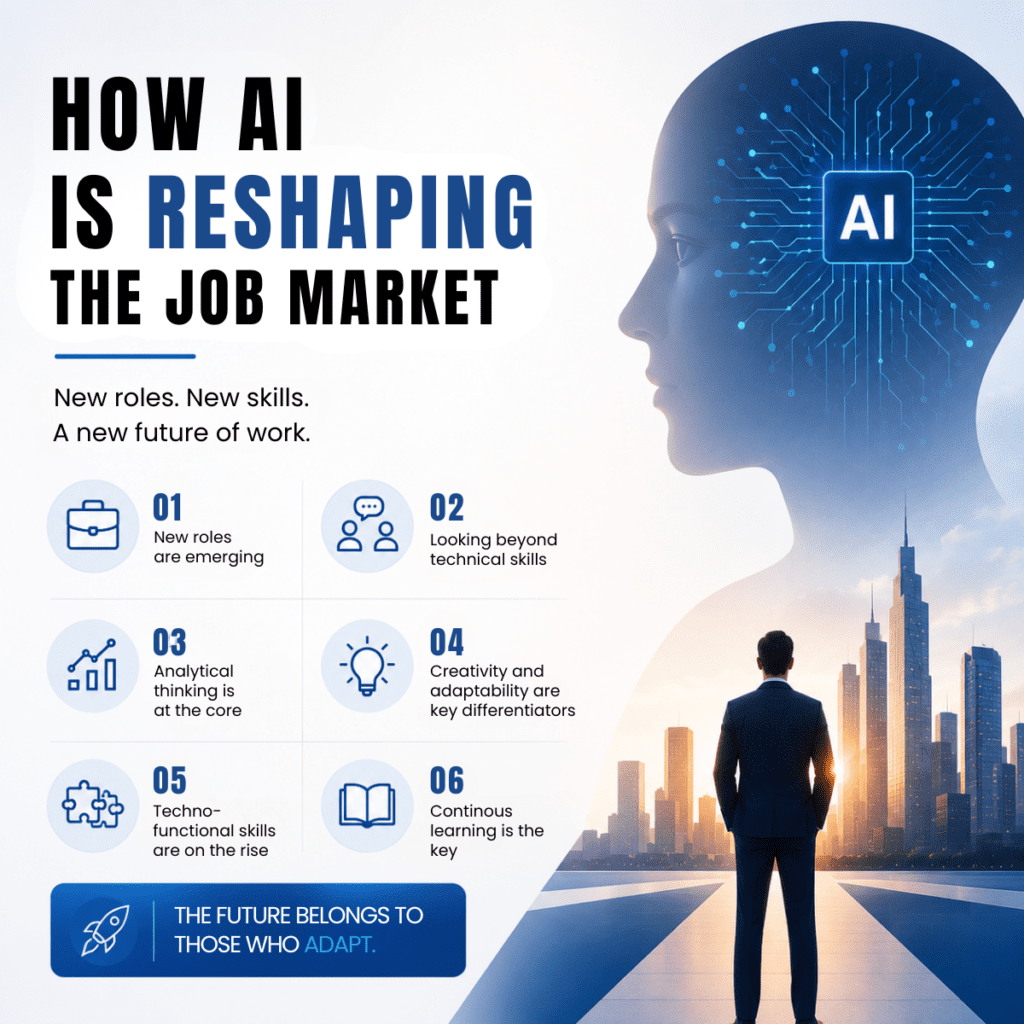
1. New Roles Are Emerging Faster Than Ever
As AI adoption surges across industries, entirely new job categories are taking shape. Companies are hiring for roles that barely existed a few years ago, including:
- AI Specialist
- Applied AI Engineer
- Generative AI Engineer
- Data Scientist
- Cybersecurity Expert
- AI Automation Architect
These roles blend deep technical expertise with strategic thinking, and they’re becoming essential for organizations looking to stay competitive. As businesses continue to integrate AI into products, services, and operations, demand for these specialized skills is expected to grow significantly.
2. The Shift Beyond Technical Skills
While technical skills remain important, they’re no longer enough on their own. AI and automation are elevating the importance of human-centric capabilities, such as:
- Communication
- Collaboration
- Leadership
These skills are becoming the differentiators that determine who thrives in an AI-driven workplace. As teams become more cross-functional and technology becomes more accessible, the ability to influence, align stakeholders, and work effectively with others is becoming increasingly valuable.
3. Analytical Thinking Is Now a Core Requirement
With data driving nearly every decision, analytical thinking has become a must-have skill. Professionals who can interpret data, identify patterns, and make informed decisions will continue to be in high demand.
Organizations are increasingly seeking individuals who can go beyond collecting information and transform data into meaningful insights, strategic actions, and measurable business outcomes. This capability is becoming essential across both technical and business functions.
4. Creativity and Adaptability Are Key Differentiators
As automation takes over repetitive tasks, creativity and adaptability are increasingly valuable. The ability to innovate, pivot quickly, and approach problems with fresh thinking is becoming a defining advantage.
With technology evolving rapidly, organizations need professionals who can continuously learn, contribute new ideas, and thrive in dynamic environments. Those who embrace change rather than resist it will be better positioned for long-term success.
5. The Rise of Techno-Functional Skills
The future belongs to professionals who can bridge the gap between technology and business. Techno-functional skills, the ability to understand both technical systems and business needs are becoming increasingly critical across product, business, and enabling functions.
As digital transformation accelerates, companies are placing greater value on professionals who can align technology initiatives with operational goals, improve cross-functional collaboration, and support successful implementation across the organization.
6. Learning Agility Is the New Competitive Edge
AI is evolving at a pace that makes static skill sets obsolete. Continuous upskilling is now even more important. Whether through certifications, microlearning, or hands-on experimentation, lifelong learning is becoming a professional necessity.
Professionals who actively invest in continuous learning are better positioned to adapt to emerging technologies and evolving opportunities. In an AI-driven world, learning agility may become one of the most valuable professional strengths of all.
Technology, Talent & Transformation
A new era of work is emerging, one that rewards agility, curiosity, and a willingness to evolve. For organizations and individuals alike, the message is clear: embrace the change, invest in new skills, and stay ahead of the curve.